Muchas empresas implementan agentes de IA impulsadas por la promesa de la eficiencia, pero se topan con una realidad incómoda: los proyectos se estancan en pilotos que no mueven la aguja del negocio. Comprar tecnología de última generación y colocarla sobre sistemas legacy desorganizados es la receta para la frustración. ¿Por qué tus agentes autónomos no están rindiendo y cómo la falta de integración destruye su inteligencia?
El verdadero freno: datos desorganizados y el ancla de los sistemas legacy
El paso de los asistentes virtuales tradicionales a los agentes de IA autónomos representa un salto profundo. Mientras que un asistente lineal solo genera texto o responde preguntas según un guion fijo, un agente autónomo tiene la capacidad de razonar, planificar y ejecutar secuencias de tareas complejas con la mínima intervención humana.
Para que esta capacidad sea efectiva, el agente necesita alimentarse de información precisa y en tiempo real. Es acá donde las organizaciones chocan contra su propia infraestructura:
- La fragmentación de la información: los datos críticos del negocio suelen estar atrapados en silos infranqueables.
- Sistemas heredados (legacy): plataformas antiguas que jamás fueron diseñadas para la era de la inteligencia artificial operan como un ancla que frena la autonomía.
- Falta de madurez en herramientas clave: de acuerdo con la Encuesta Nacional sobre Adopción de IA (2025) de la Universidad Di Tella, un porcentaje muy bajo de empresas opera con sistemas de gestión de clientes (CRM) verdaderamente maduros. Sin una base sólida y ordenada, la IA no tiene un norte claro.
Sin integración no hay inteligencia
Un agente de IA enfocado en ventas (Sales) o en atención al cliente (Service) solo es verdaderamente útil si cuenta con visibilidad completa de la operación real.
- Si un agente de atención no puede revisar los sistemas de logística, no podrá resolver un reclamo por un envío demorado de forma autónoma.
- Si un agente de ventas no tiene acceso al inventario en tiempo real ni a las plataformas de facturación, sus propuestas comerciales carecerán de precisión técnica.
Para solucionar este desafío técnico, el mercado actual impulsa arquitecturas integradas que protegen lo que se conoce como «IA soberana»: la premisa de que el conocimiento y los datos más críticos deben permanecer bajo el control estratégico y seguro de la organización.
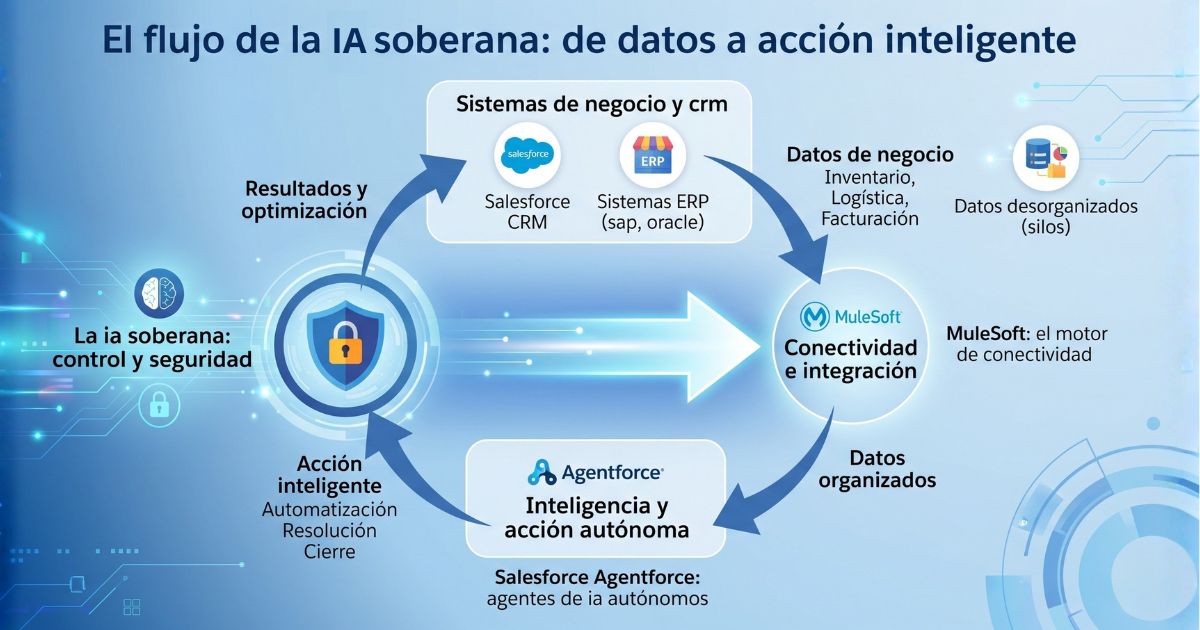
En la práctica, esto se resuelve conectando el ecosistema. Herramientas como MuleSoft actúan como el motor de conectividad indispensable con los sistemas duros del negocio (como SAP u Oracle), permitiendo que plataformas como Salesforce Agentforce actúen y tomen decisiones sobre información unificada, real y segura. La conectividad es el verdadero habilitador de la inteligencia.
Radiografía de la adopción: ¿quiénes logran un impacto real?
A pesar de las barreras de infraestructura, la tracción de los agentes de IA en mercados clave está marcando el camino de lo que viene. Las empresas que han logrado resolver la integración de datos ya muestran indicadores contundentes de negocio.
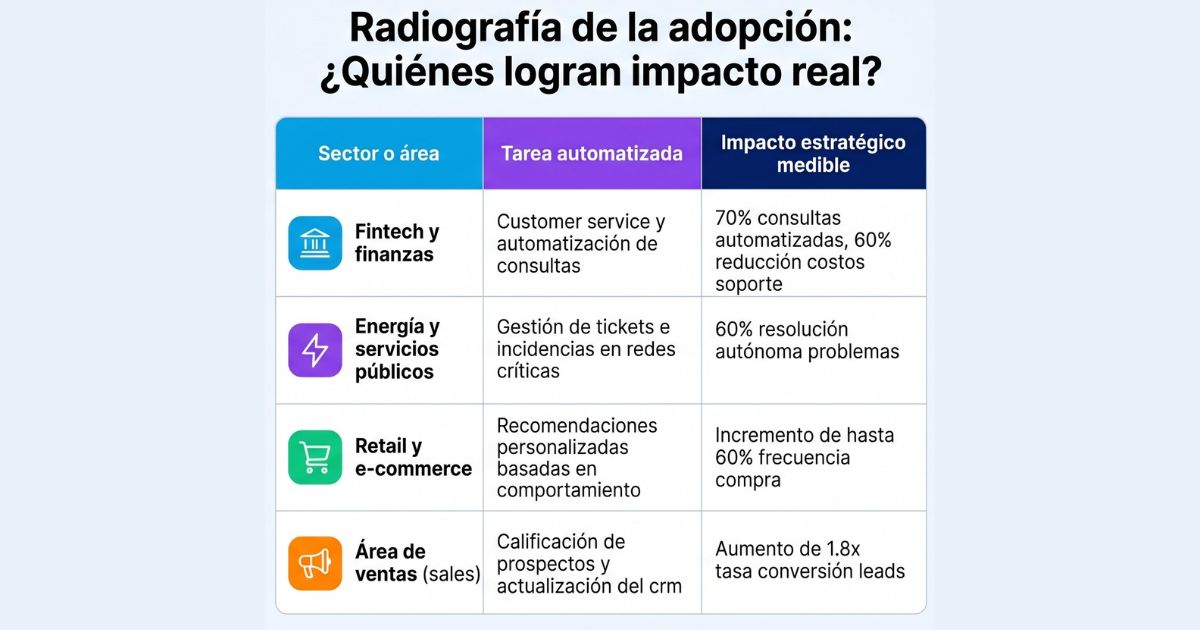
Como señala Martín Luro, CEO de ACQUA IT: “La adopción real ya existe, pero todavía está más cerca de ‘primeros despliegues con foco’ que de una implantación masiva”.
La clave para los próximos años será la transición de estos pilotos aislados hacia adopciones estructurales, en las que los agentes pasen a ser componentes nativos e integrados en el core del negocio.
Cómo salir de la trampa: claves para CIOs y Directores de Tecnología
Para evitar la infrautilización de herramientas y asegurar un retorno de inversión (ROI) real, la estrategia tecnológica debe redefinirse desde la base.
Desde ACQUA IT recomendamos cuatro pasos críticos:
- Priorizar el diagnóstico antes que el software: entender exactamente qué fricción del proceso se quiere resolver evita inversiones apuradas basadas solo en tendencias.
- Identificar un caso de uso con impacto medible: no intentar automatizar toda la empresa el primer día. Empezar por un flujo claro en ventas, soporte o marketing donde los datos ya estén disponibles.
- Gobernar y ordenar los datos: sin datos estructurados e integrados de raíz, no hay inteligencia artificial aplicable que sea confiable.
- Elegir un partner estratégico, no un mero implementador: buscar un socio tecnológico que entienda la complejidad de la arquitectura de datos y la integración de sistemas legacy, y no solo la configuración de la interfaz de IA.
El verdadero desafío de la transformación digital ya no pasa por adquirir inteligencia artificial, sino por conectarla de manera efectiva con las venas operativas de tu organización.
Diagnóstico de arquitectura de datos e IA
¿Querés saber si tu infraestructura actual está lista para soportar agentes de IA autónomos con un ROI real? En ACQUA IT te ayudamos a diseñar una arquitectura integrada, segura y eficiente. Contactate con nuestros especialistas.